The Inversion Practice Problem Most Tall Yogis Don't Expect
Quick Answer: A tall practitioner’s fully extended legs in an inversion require significantly more vertical clearance than average ceiling height guidance assumes — measuring actual available clearance before attempting inversions, and using a wall or corner for support, meaningfully reduces the risk of an unexpected ceiling or fixture contact.
Most home yoga space guidance focuses on floor-level mat space and rarely addresses vertical clearance specifically, which becomes a real practical concern once inversions are part of a taller practitioner’s practice.
Why is ceiling clearance a bigger consideration for tall practitioners specifically?
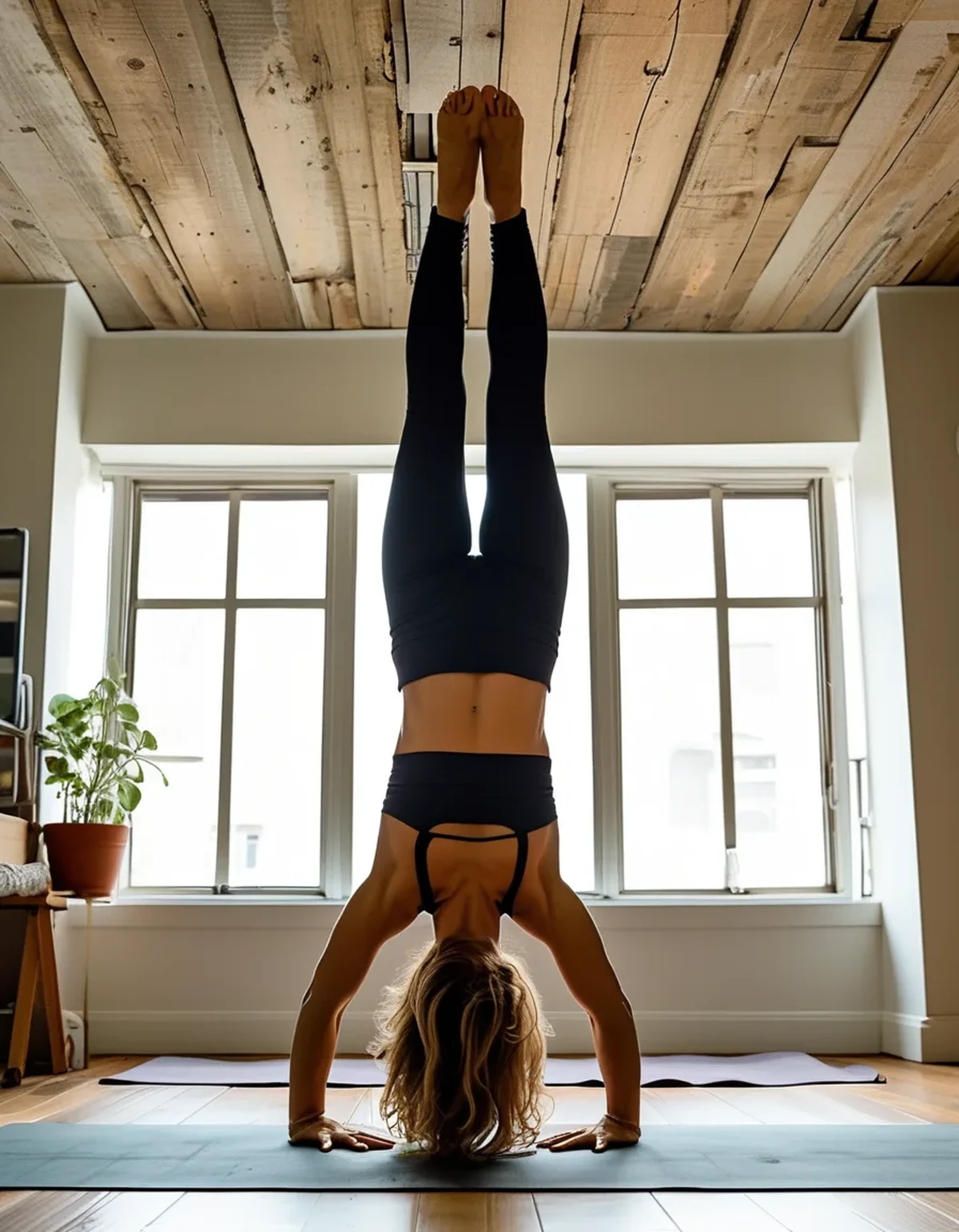
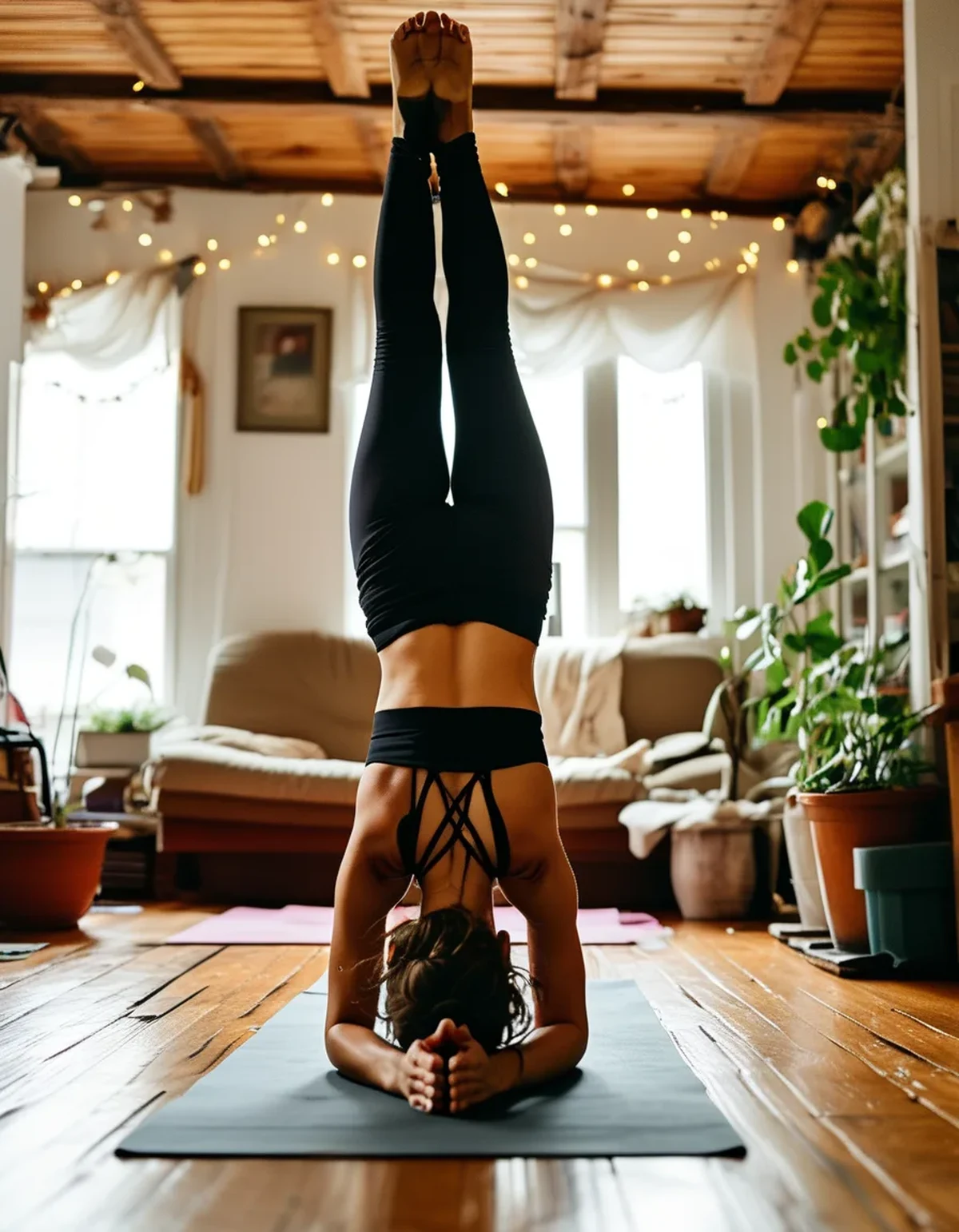
A fully extended inversion (headstand, handstand, shoulder stand) requires vertical space roughly equal to the practitioner’s full height plus some margin for balance adjustment — for a tall practitioner, this can mean needing 7.5-8+ feet of clear vertical space, which exceeds standard 8-foot ceiling height in many homes once furniture, light fixtures, or ceiling fans are accounted for. A shorter practitioner has meaningfully more margin for error in the same room.
This isn’t just a comfort issue — an unexpected ceiling fixture contact during a balance wobble in an inversion is a genuine safety concern worth planning around.
How can you actually check if your space is safe before attempting an inversion?
Standing at your intended practice spot with arms fully extended overhead and checking the actual clearance to the ceiling or nearest fixture gives a much more accurate real-world sense of available space than estimating from general room height. Accounting for a few extra inches of margin beyond your extended reach — since inversions involve dynamic balance adjustment, not a perfectly still position — is a reasonable safety buffer.
This simple pre-check takes under a minute and meaningfully reduces the risk of a surprise contact mid-pose.
Myth vs Fact: Tall Practitioners and Inversion Space
Myth: Standard 8-foot ceilings are sufficient clearance for anyone practicing inversions. Fact: For taller practitioners, 8-foot ceilings can leave uncomfortably little margin once fixtures and balance adjustment room are factored in.
Myth: A wall is only useful for beginners still learning the pose. Fact: Wall support remains a legitimate and safe tool at any skill level specifically to manage balance in tighter vertical spaces.
Myth: If you’ve never hit the ceiling before, clearance isn’t actually a concern. Fact: A near-miss during a balance wobble is common and often goes unnoticed as a warning sign until an actual contact happens.
What adjustments actually make inversion practice safer in a limited-clearance space?
Practicing against a wall or in a corner, rather than in open floor space, gives a stable reference point that reduces the likelihood of an uncontrolled wobble toward a fixture. Choosing a lower-clearance-requirement variation — like a supported shoulder stand or a forearm-supported dolphin pose — over a full extended headstand is also a reasonable substitution in genuinely tight spaces, without giving up the practice benefits entirely.
A studio session with higher ceilings, even occasionally, is worth prioritizing specifically for full inversion practice if home space is consistently limited.
FAQ: Tall Yoga Practitioners and Inversion Space Questions, Answered
What’s a reasonable minimum ceiling clearance to aim for before attempting a full inversion?
A rough guideline is your fully extended overhead reach plus at least 12-18 inches of additional margin for balance adjustment.
Are there inversion variations that require significantly less vertical space?
Yes — supported shoulder stands, legs-up-the-wall poses, and dolphin pose all provide inversion benefits with meaningfully lower clearance requirements than a full headstand.
Does practicing near a wall reduce the actual benefit of the pose?
No — wall-supported inversions still provide the core physical and circulatory benefits, and many experienced practitioners use wall support intentionally rather than only as a beginner aid.
TL;DR:
- A tall practitioner’s full inversion often requires 7.5-8+ feet of clearance, close to or exceeding standard ceiling height
- Checking actual clearance with arms extended overhead before attempting the pose takes under a minute
- Wall or corner support is a legitimate safety tool at any skill level, not just for beginners
- Lower-clearance variations like supported shoulder stands are reasonable substitutes in tight spaces
Inversion practice for tall yogis is entirely doable at home — it just requires actually measuring the space first instead of assuming standard ceiling height is enough.
Keep Reading
This article is for general informational and styling purposes only. Fit, sizing, and product availability may vary.
