Why Tall Yogis Should Set Up Poses From the Hands, Not the Feet
Quick Answer: Most yoga cues specify distances - hands under shoulders, feet hip-width, step forward to the top of the mat - that assume average limb proportions. For a taller body those distances produce compressed or overextended shapes. Setting up from the weight-bearing hands and letting the feet find their own place produces correct joint angles rather than correct measurements.
You have been told your downward dog is too long, your warrior is too wide, and your forward fold should reach further than it does.
None of that is a flexibility problem. The cues you are being given are distances, and distances that suit a 5ft 5 body produce a different shape entirely on a 6ft one.
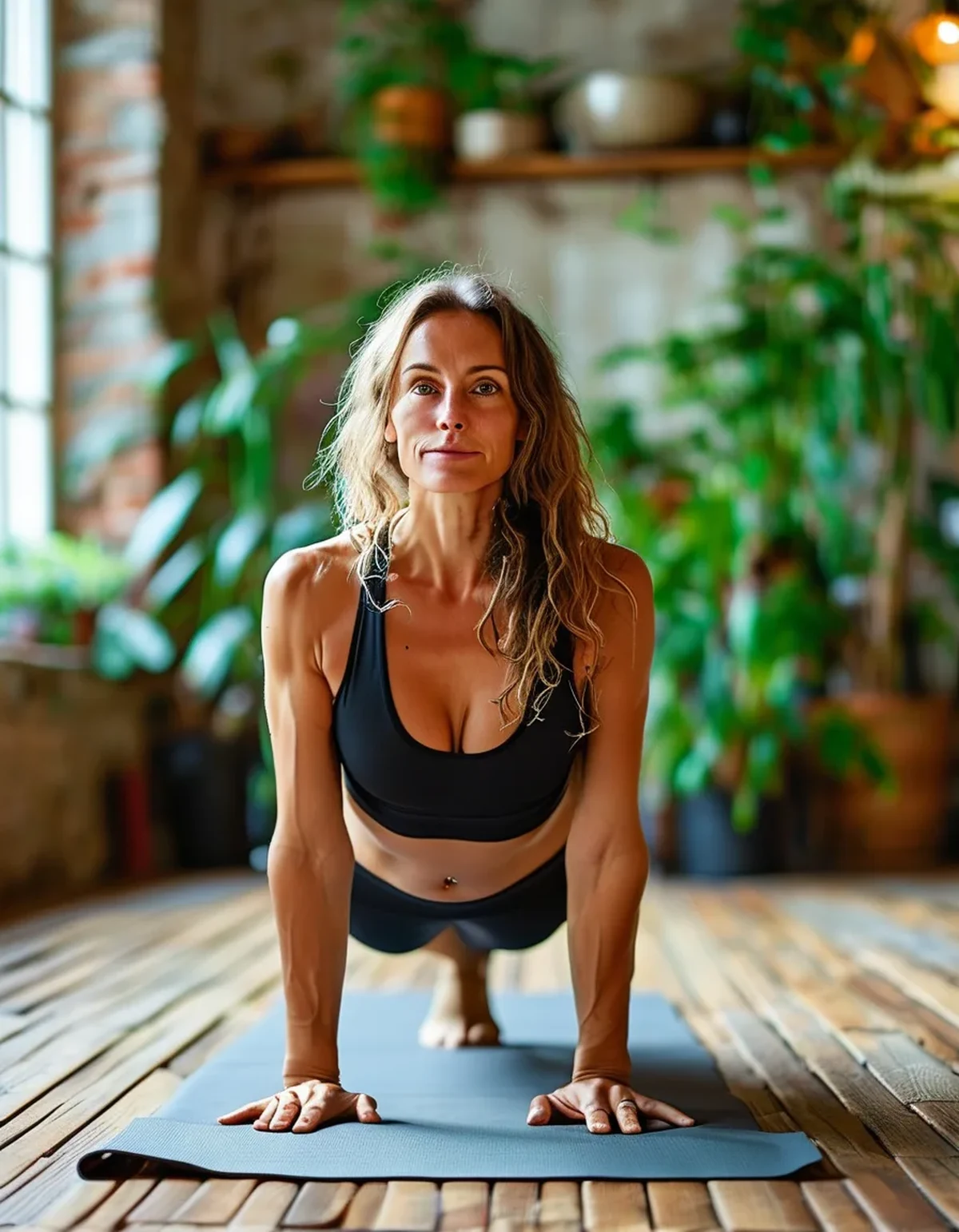
Why do standard cues fail on a long body?
Because a cue that names a distance is really trying to produce a joint angle, and the translation only holds at average proportions.
Take downward dog. The common instruction is hands and feet a certain distance apart, often described in relation to the mat. What the teacher actually wants is a specific angle at the shoulder and hip with a long spine. On a body with longer arms and legs, reproducing the named distance produces a shorter, more compressed shape than intended - the hips drop, the spine rounds, and the pose stops doing what it is for.
The same happens in warrior two. Feet a fixed distance apart on a long body gives a shallower front knee bend and a different pelvic position than on a shorter one, so the pose that looks correct from outside is doing something else internally.
And mats are a fixed length, which is the most underrated constraint in yoga for tall practitioners. A standard mat is 68 inches. Cues that reference the top or the back of the mat are effectively cues about a fixed distance, and they simply do not scale.
The general principle is that alignment is about angles and relationships, not measurements. A teacher gives distances because they are quick to say and work for most of the room. For a tall student they are a starting approximation that needs adjusting every time.
What does building from the hands actually mean?
Placing the weight-bearing or stabilising limb first, then letting the other end land where the correct angle puts it.
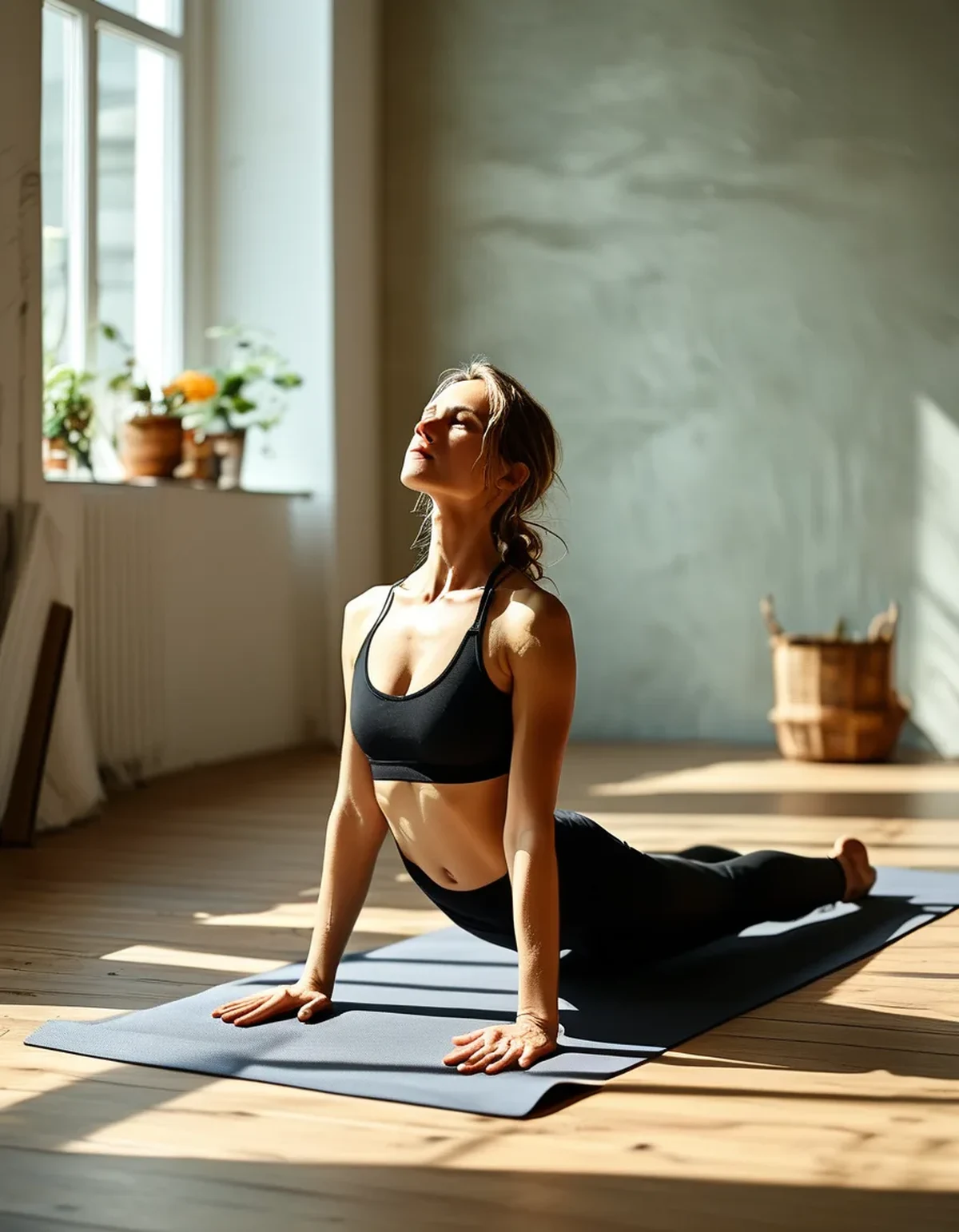
In downward dog, set the hands where they belong - shoulder width, fingers spread, arms at the angle that lets your shoulders open - then walk the feet back until your spine is long and your hips are at the height they should be. The distance that results is your distance. It will be longer than the person next to you and it will be correct.
In a lunge or warrior, place the front foot and then let the back foot go where the front knee angle demands, rather than pre-measuring the stance.
In a forward fold, hinge at the hip and let the hands land wherever they land - blocks exist for exactly this. Reaching for the floor because the cue said floor is how tall practitioners round their lower backs, and a rounded lumbar spine in a loaded fold is the most common way to get hurt in a beginner class.
The general order: place the part that carries load or sets the joint angle, then let the far end find its position.
This also reframes props. A block is not a concession for inflexibility - for a tall practitioner it is a correction for the fact that the floor is further away from your hips than it is for most of the room. Two blocks under the hands in a standing fold restores the same joint angle a shorter person gets from the floor.
Myth vs Fact: Yoga and Long Limbs
Myth: A longer downward dog means you are doing it wrong. Fact: Longer limbs produce a longer pose. What matters is spine length, hip height, and shoulder angle, and if those are right the footprint is irrelevant.
Myth: If you cannot reach the floor you need more flexibility. Fact: Sometimes, and often it is simply that your hands are further from the ground because your legs are longer. Hamstring length is a separate question from arm-to-leg ratio, and blocks answer the second one instantly.
Myth: Standard mats are fine for everyone. Fact: A 68-inch mat means a tall practitioner’s hands or feet come off the mat in several common poses, which affects grip and confidence. Extra-long mats at 72 to 84 inches exist and are the single best purchase a tall yogi can make.
Myth: Balance is harder for tall people because they are less coordinated. Fact: A higher centre of mass genuinely makes balance mechanically harder, and small deviations produce larger corrections. It is physics rather than skill, and it improves with practice like anything else - it just starts harder.
Myth: You should match the teacher’s shape. Fact: Matching the shape of a differently proportioned body is how tall students end up compressed or overextended. Match the intention of the pose, and ask the teacher what the pose is meant to do if you are unsure.
What should you actually change in class?
A handful of adjustments, most of which take no extra time.
Buy a long mat. 72 inches minimum, 78 to 84 if you are above about 6ft. It removes an entire category of problem and it is the reason many tall practitioners suddenly enjoy a class they used to find awkward.
Keep two blocks within reach every session. Not for occasional use - as standard equipment, for standing folds, low lunges, and anything where a hand is meant to reach the ground.
Translate distance cues into angle cues in your head. When the teacher says step to the top of the mat, hear step forward until your front knee is over your ankle. When they say hands shoulder-width, check the angle at your shoulder rather than the gap between your hands.
Set up from the load-bearing end first, then let the rest follow.
Tell the teacher once. A short word before class - I am tall so my stances run long, please adjust me if something looks off - changes the quality of teaching you receive for the rest of the term. Good teachers welcome it.
Position yourself with space around you. A long body in a full class needs a wider footprint, and being crammed between two mats forces compromises in every standing pose. Arriving five minutes early to claim an edge spot is worth more than it sounds.
And expect balance work to need a longer hold to progress. A higher centre of mass means larger corrections, so tree pose genuinely takes more practice. That is not a deficiency, and treating it as one is how people conclude yoga is not for them.
This is general guidance rather than personal instruction - if you have an injury or a specific condition, work with a qualified teacher who can see you practise.
FAQ: Tall Yoga Questions, Answered
What mat length should I buy?
A rough guide is your height plus a few inches, so 72 inches works up to about 5ft 11 and 78 to 84 inches suits taller practitioners. Check thickness too - a longer mat in a thin travel weight will not protect long limbs in kneeling poses.
Are props a sign I am not progressing?
No, and for tall practitioners they are often permanent equipment rather than a stage. A block under the hand in triangle corrects a proportional reality, not a flexibility gap, and using one indefinitely is entirely normal.
Why does my downward dog hurt my wrists more than other people’s?
Longer arms and a higher body weight above them mean more load through the wrist at the same angle. Spreading the fingers, pressing through the knuckles rather than the heel of the hand, and using wedges or a slightly bent-elbow variation all help - and it is worth mentioning to a teacher rather than pushing through.
TL;DR:
- Yoga cues specify distances that are really trying to produce joint angles, and the translation only works at average proportions.
- Set up from the weight-bearing hands or the front foot, then let the far end land where the correct angle puts it.
- A 72 to 84 inch mat and two blocks kept permanently within reach remove most of the friction.
- Tell your teacher once that your stances run long, and expect balance work to start harder because of a higher centre of mass.
If every class leaves you feeling slightly wrong in poses you clearly can do, stop measuring and start checking angles. The cue was never written for your proportions.
Keep Reading
This article is for general informational and styling purposes only. Fit, sizing, and product availability may vary.
