Why Props Change More for Tall Yogis Than Any Cue Does
Quick Answer: Standard yoga blocks are 23 x 15 x 10cm, and the three heights they offer are calibrated for an average-height practitioner. A taller person has a greater distance between hand and floor in every seated and standing forward fold, so the tallest standard block often still leaves you reaching. Stacking two blocks, using a bolster, or working near a chair changes which poses are accessible far more than any verbal cue can.
The cue was fine. Your arms are simply further from the floor than the cue assumed.
A prop that is the right height fixes in one second what an adjustment cannot fix at all.
Why does prop height matter more with a long body?
Because prop height is absolute and body proportion is not.
A block gives you three heights: 10cm, 15cm and 23cm. Those numbers were chosen to bridge the gap between an average practitioner’s hands and the floor in the poses where props are commonly used.
For a taller practitioner, the gap is bigger in every one of those poses. In a seated forward fold, your torso has further to travel. In a standing fold with the hands to blocks, your hands start further from the ground. In a low lunge, your hips sit higher because your femur is longer.
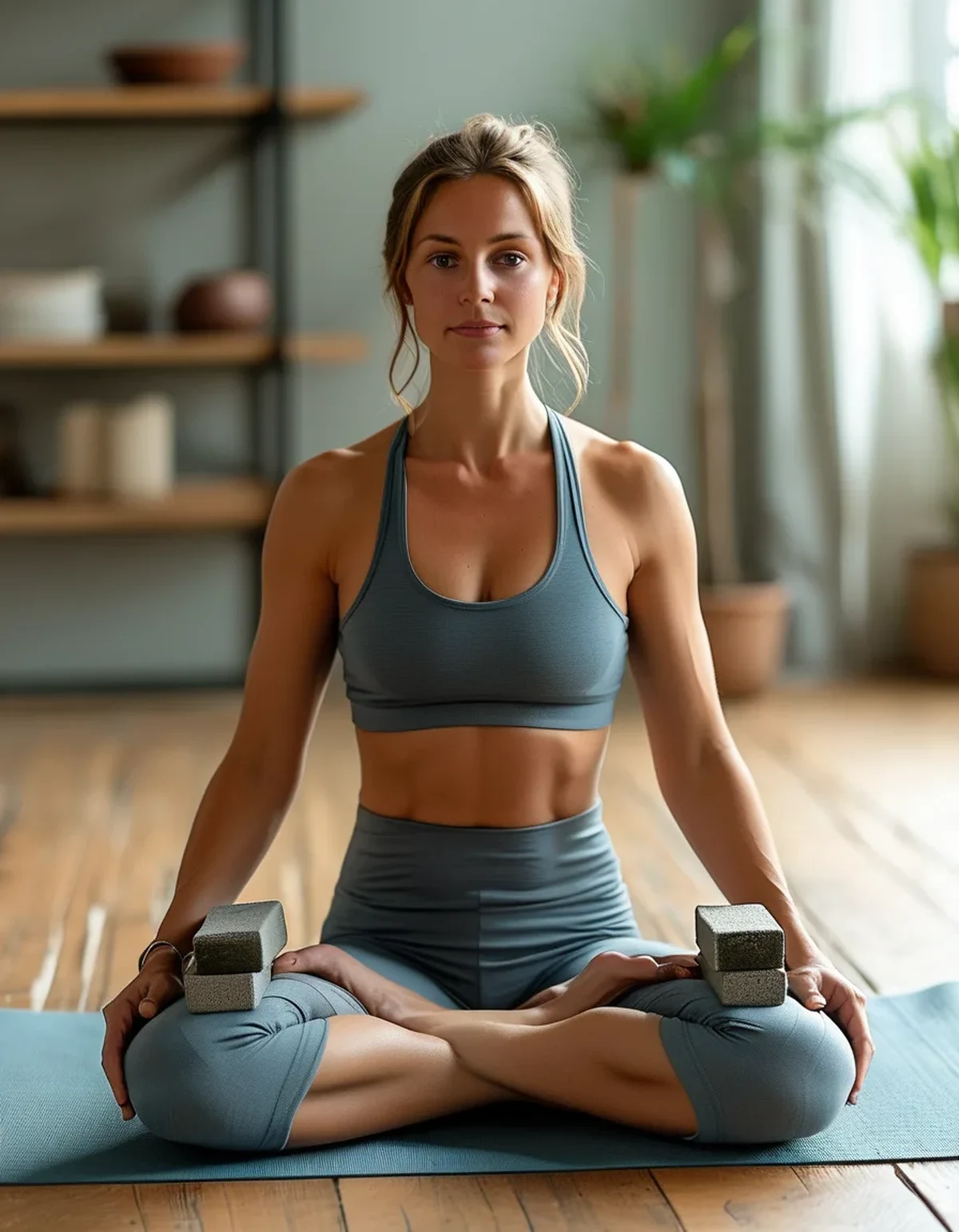
The result is that the tallest block is often the starting point rather than the maximum. Where an average-height student uses the middle height, a tall student may need the tall height; where they use the tall height, you need two blocks stacked.
Stacking is not a failure state. It is the correct response to a fixed-size prop being used by a body it was not sized for, and yet almost nobody in a class does it, because there is an unspoken sense that using more prop means being less able.
And the consequence of under-propping is not just discomfort. A hand that cannot reach a support means the spine rounds to make up the distance, which is precisely what the prop was there to prevent. The pose stops training what it was meant to train.
Which props actually change things for tall practitioners?
Four, and one of them is not usually thought of as a prop at all.
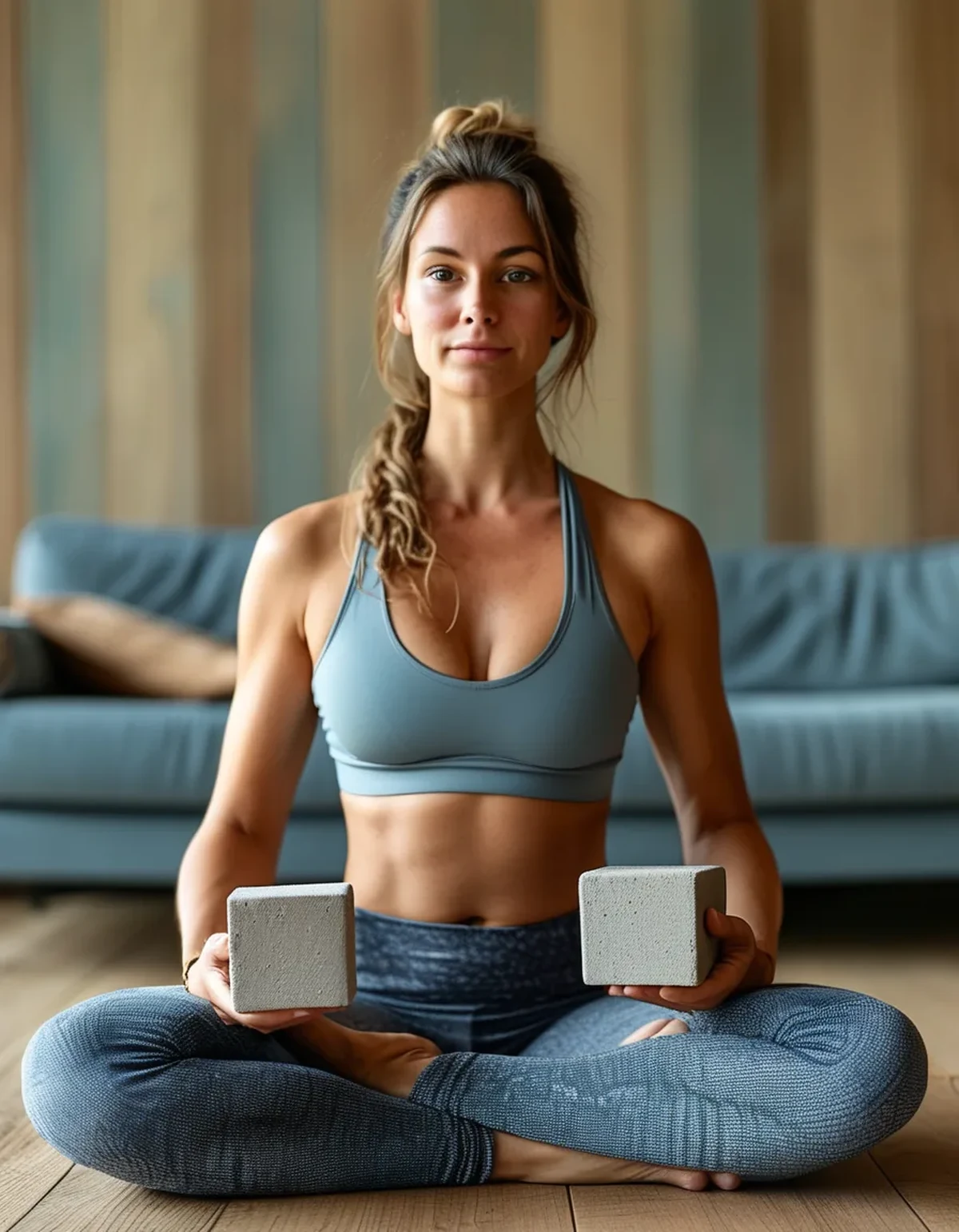
A second block. The most useful single addition. Two blocks stacked at the tall setting gives 46cm, which is where a lot of tall practitioners actually need their hands in a standing forward fold if the hamstrings are anything less than very open. Carrying your own second block to class solves more than any other purchase.
A bolster rather than a folded blanket. Bolsters are taller and firmer, which matters when the distance to be filled is greater. In seated poses, sitting on a bolster rather than a blanket raises the hips enough to let the pelvis tip forward, and for long femurs this is often the difference between a seated forward fold being useful and being a lower back compression exercise.
A longer strap. Standard straps are around 180cm, and a tall practitioner with long arms and legs frequently runs out. A 240cm strap costs very little and makes bound poses and hamstring work genuinely accessible rather than approximately accessible.
A chair. Underused in general practice and disproportionately valuable for tall bodies. A chair seat is around 45cm, which is close to two stacked blocks, and it offers a much larger and more stable surface. Chair-supported forward folds, lunges and twists are legitimate versions of the poses rather than modifications for the infirm.
And a longer mat, which is a separate issue and a real one. A 180cm mat does not accommodate a tall practitioner in savasana or in a long lunge, and 200cm+ mats exist and cost little more.
What Nobody Tells You About Props in a Class
Teachers cue to the room, not to you. Take the block on the tall setting is a reasonable instruction for the median student and simply the wrong height for you. Adjusting without waiting to be told is not disobedience; it is the only way the cue can be applied correctly to your body.
Grab a block often means grab two. Collect what you need at the start rather than mid-flow, because leaving your mat to fetch a second block in the middle of a sequence is what stops people using it.
Props change with the pose, not with your level. The same practitioner may need two blocks in a standing fold and none in a lunge. Setting out several props at the start and using different combinations through a class is normal practice, and it looks like preparation rather than struggle.
Sitting on height is the most under-used adjustment. For anyone with long femurs, sitting on a block or bolster in any cross-legged position changes the pelvic angle and removes most of the lower back rounding that makes seated work uncomfortable. Many tall practitioners spend years assuming seated poses are simply unpleasant for them.
Wall space matters as much as prop height. A tall practitioner needs more wall than the space allocated between mats, particularly for inversions and supported poses. Arriving early enough to get a wall spot with room either side is a practical necessity rather than a preference.
And the studio ceiling is a genuine constraint in some spaces for arms-overhead standing poses and any inversion. It is worth knowing before you commit to a studio, and it is the sort of thing you can only assess by standing up in the room.
How should a tall practitioner set up their home practice?
Around the props, because at home you can actually have the right ones.
Buy the second block and the long strap first. Together they cost very little and they change more poses than anything else you could buy.
Get a mat of at least 200cm if you practise anything with long lunges, savasana or floor work. The standard 180cm mat means your feet or head are on the floor in a meaningful proportion of the practice.
Keep a chair in the practice space. Not for restorative work only — for standing folds, supported lunges, twists and hamstring work where the height is right and a block is not.
Use a firm bolster. Soft ones compress under a taller, heavier body and lose the height that made them useful, which is why a firm bolster is worth the extra cost for tall practitioners specifically.
And set the height by the spine, not by the effort. The correct prop height is the one where your spine can stay long. If you are rounding to reach the prop, it is too low, regardless of how it looks or how flexible you feel. This one principle replaces most of the guesswork.
Seasonal note: as practice moves indoors and rooms get cooler through autumn, add a blanket to the standard set-up. Cold muscles have less range, and a tall practitioner working at the limit of their prop heights will notice the reduction first — which is another argument for having a slightly taller option available in the cooler months rather than assuming your summer setup still applies.
General information rather than medical advice: sharp or pinching sensations, particularly in the lower back, knees or shoulders, are a reason to add height or come out of a pose rather than to breathe through it.
FAQ: Tall Yogis and Props, Answered
Does using more props mean I am less flexible?
No — it means the props are a fixed size and you are not. Two people with identical hamstring flexibility will need different prop heights if they are different heights, because the distance to be bridged is different. The prop height tells you about geometry, not about ability.
Are cork or foam blocks better for stacking?
Cork, comfortably. Foam blocks compress under load and slip against each other when stacked, which is both less stable and less predictable in height. Cork is heavier to carry and much more secure, and for a taller practitioner putting real weight through stacked blocks, the stability matters.
Should I tell my teacher I am adjusting the props?
You do not need permission, and mentioning it once at the start of a class with a new teacher is worth doing. Most teachers appreciate knowing, and some will start offering tall-appropriate options to the whole room, which tends to help several people rather than only you.
TL;DR:
- Blocks come in three fixed heights calibrated for an average practitioner, and every hand-to-floor distance is greater on a tall frame.
- Stacking two blocks, using a bolster instead of a blanket, a 240cm strap and a chair are the four changes that matter most.
- Sitting on height in any cross-legged pose fixes the pelvic angle that makes seated work uncomfortable for long femurs.
- Set prop height by whether your spine can stay long, not by how the pose looks or how capable you feel.
- Get a 200cm+ mat, a firm bolster and cork rather than foam blocks for stability when stacking.
The reason this matters more than any verbal cue is that a cue asks you to change what your body is doing, while a prop changes what the pose is asking for. When the mismatch is dimensional, only one of those can work — and it is the one that takes a second and costs nothing.
Keep Reading
This article is for general informational and styling purposes only. Fit, sizing, and product availability may vary.
