Why Tall Yogis Need a Longer Mat More Than a Thicker One
Quick Answer: A standard yoga mat is about 173cm long, which is shorter than a great many practitioners are tall. Running out of mat forces you to shorten stances, shift position mid-flow, or place hands and feet on the floor — all of which change your alignment. A long mat of 200cm or more solves more practice problems than any amount of extra thickness.
You keep finding yourself half off the mat in a long lunge.
You shuffle back between poses without really thinking about it.
You assumed that was just what practising as a tall person is like.
Why is standard mat length a problem?
Because the standard was not set with tall practitioners in mind, and several poses need more than your height.
The common standard is around 173cm, sometimes 180cm. Anyone taller than that has already run out of mat lying down in savasana, before considering anything else.
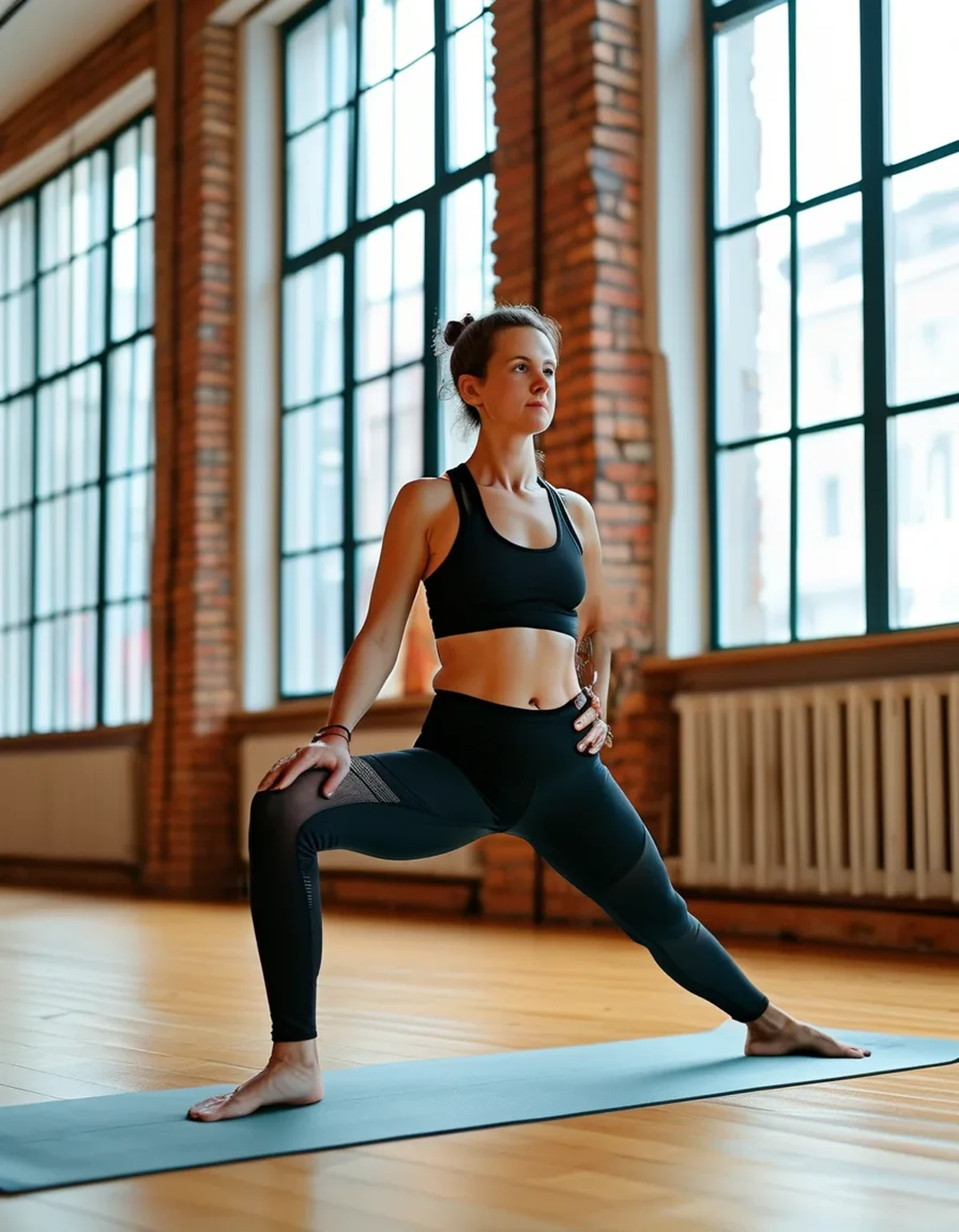
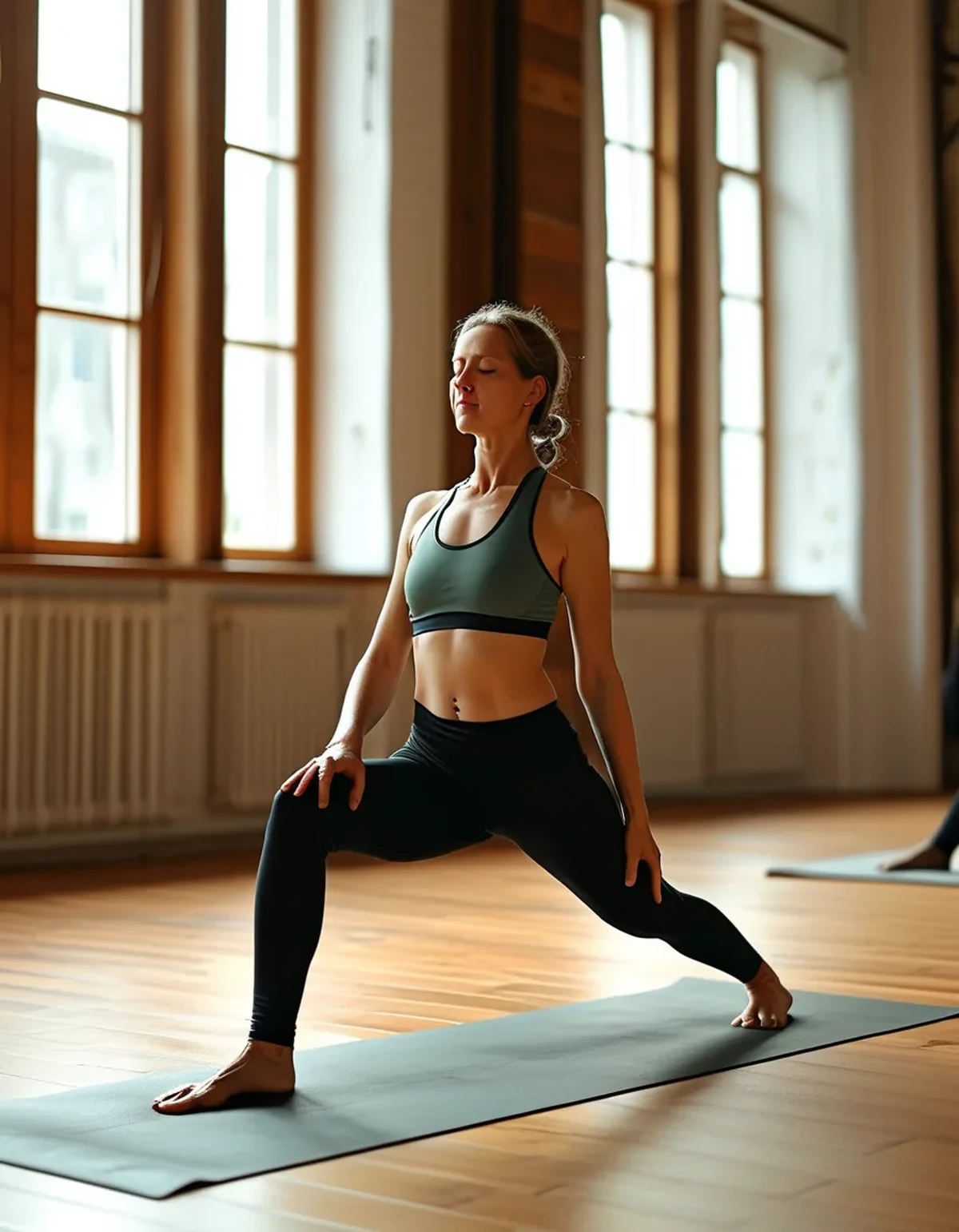
The poses that need extra length are not exotic ones. Downward dog needs the distance from your hands to your feet, which for a tall practitioner can exceed the mat’s length. Long lunges, warrior one and two, and pyramid all require a stance considerably longer than in a shorter body. And any vinyasa transition from a standing pose to plank needs the full length behind you.
What happens in practice is that you make an unconscious compromise. You shorten the stance, which changes the angle at the hip and knee and reduces the intended stretch. Or you keep the stance and put your back foot on the floor, which on a wooden studio floor means a slipping back foot and a pose you cannot settle into.
What does a shortened stance actually cost you?
The specific benefit the pose was designed to deliver.
In a long lunge or warrior one, the length of the stance determines the stretch at the front of the back hip. Shortening it reduces the hip flexor stretch, which for most people is one of the main reasons to be in the pose at all.
In downward dog, the hand-to-foot distance determines the angle of your torso and therefore where the stretch lands. Too short and you get a rounded lower back and compressed shoulders. Tall practitioners often find dog uncomfortable, and mat length is a surprisingly frequent cause.
In triangle and pyramid, stance length determines how much the hamstring is loaded and how much the pelvis can rotate. A shortened stance means a shortened hamstring stretch, and often a compensatory bend somewhere else.
Across a whole practice, the cumulative effect is that a tall practitioner working on a short mat gets a systematically shallower version of the practice, and typically assumes it is a flexibility problem rather than an equipment one.
What should you look for in a mat?
Length first, then grip, then thickness, in that order.
Length: aim for 200cm or more. Extra-long mats are widely available, commonly at 200cm, 213cm or 220cm. As a rule of thumb, you want your height plus at least 15 to 20cm. Width is worth considering too — standard is 61cm, and a 66 to 71cm wide mat makes a real difference to broad shoulders and wide-stance poses.
Grip second. For a taller, heavier practitioner, a slipping hand in downward dog is more consequential because there is more mass to control. Natural rubber and polyurethane top surfaces generally grip better than cheap PVC, particularly once you sweat.
Thickness third, and less is often more. A 4 to 5mm mat gives good stability. Thicker mats — 6 to 8mm — are more comfortable for kneeling and noticeably worse for balance, because the surface deforms under you. For a tall practitioner with a higher centre of mass, that instability is amplified.
If your knees need cushioning, the better solution is a folded blanket or a knee pad used for the specific poses that need it, rather than practising the whole class on a soft surface.
5 Adjustments That Help Tall Practitioners
1. Set up further back than feels natural. Most people centre themselves on the mat. If you are tall, start your standing poses closer to the back edge, so you have length in front for lunges and forward folds.
2. Use blocks routinely, not as a fallback. Longer limbs mean the floor is further away. Blocks are not a beginner’s tool; for a tall practitioner they are standard equipment that lets you find the intended alignment.
3. Widen your down dog slightly. A slightly wider hand and foot placement gives a tall body more room and often relieves the shoulder compression that makes dog uncomfortable.
4. Take a corner spot in class. More space around the mat means you can extend into the floor when a pose needs more than the mat gives. It also removes the constant awareness of arms crossing into someone else’s space.
5. Tell the teacher. A good teacher will offer different cues and stance guidance for a long-limbed practitioner. Most cues in a standard class are calibrated to an average frame, and asking is entirely normal.
This is general information, not medical advice. If a pose consistently causes pain rather than sensation, work with a qualified teacher or health professional.
FAQ: Tall Yoga Mat Questions, Answered
Are extra-long mats much heavier to carry?
Somewhat — a 200cm natural rubber mat at 4mm typically weighs around 2.5 to 3.5kg. If you carry it daily, a lighter travel-weight long mat is worth considering as a second mat rather than a replacement.
Is a wide mat as useful as a long one?
Length matters more for most tall practitioners, because it affects more poses. Width helps most in wide-stance standing poses and in savasana, and is a genuine improvement for broad shoulders.
Does mat thickness affect balance that much?
Yes, more than people expect. Standing balance on an 8mm mat is measurably harder than on a 4mm one, because the surface compresses unevenly under a moving foot. For a taller body with a higher centre of mass, that effect is larger.
TL;DR:
- Standard mats are around 173cm, shorter than many practitioners are tall — which forces shortened stances all class.
- Shortened stances deliver a systematically shallower version of each pose, and it gets misread as a flexibility problem.
- Prioritise length of 200cm or more, then grip, then thickness — and go thinner, not thicker, for balance.
- Set up toward the back of the mat, use blocks as standard, and take a corner spot for the extra floor space.
Most yoga equipment advice is written for a body that fits the mat. Get the mat that fits you and half the awkwardness disappears.
Keep Reading
This article is for general informational and styling purposes only. Fit, sizing, and product availability may vary.
