What Actually Happens When a Tall Yogi Gets Paired With a Much Shorter Partner
Quick Answer: A significant height difference in partner yoga poses changes leverage points, weight distribution, and where hands and feet naturally land — communicating openly about the mismatch, adjusting standard hand and foot placements, and choosing more height-forgiving partner poses over rigid, instruction-exact ones all make partner work function well despite the gap.
Most partner pose instructions assume roughly similar-height participants, and when the height gap is significant, following the instructions exactly often creates more struggle than it should — the fix is usually a small placement adjustment, not more effort.
Why does height difference specifically disrupt partner poses more than solo poses?
Partner poses rely on matched contact points — hands to shoulders, back to back, foot to hip — that assume roughly proportional reach and torso length between both participants. A significant height gap shifts where those natural contact points actually land, which can turn a pose that’s supposed to feel supportive and stable into one that feels precarious or strained for one or both partners.
What’s the most common specific problem this causes?
Back-to-back or seated partner stretches are usually the most affected, since they rely directly on matching spine and shoulder height — a large height gap means the shorter partner’s support point lands much lower on the taller partner’s back than intended, reducing how effective the counterbalance actually is for both people.
How do you actually adjust for this instead of forcing the standard instructions?
Adjusting contact points to wherever they naturally align comfortably for both partners — rather than forcing an exact instructional placement — usually works better than fighting a height mismatch. For standing partner poses, having the taller partner slightly bend knees or the shorter partner stand on a folded mat or block can close a meaningful part of the height gap without changing the pose’s basic mechanics.
What Nobody Tells You About Tall-Short Partner Yoga
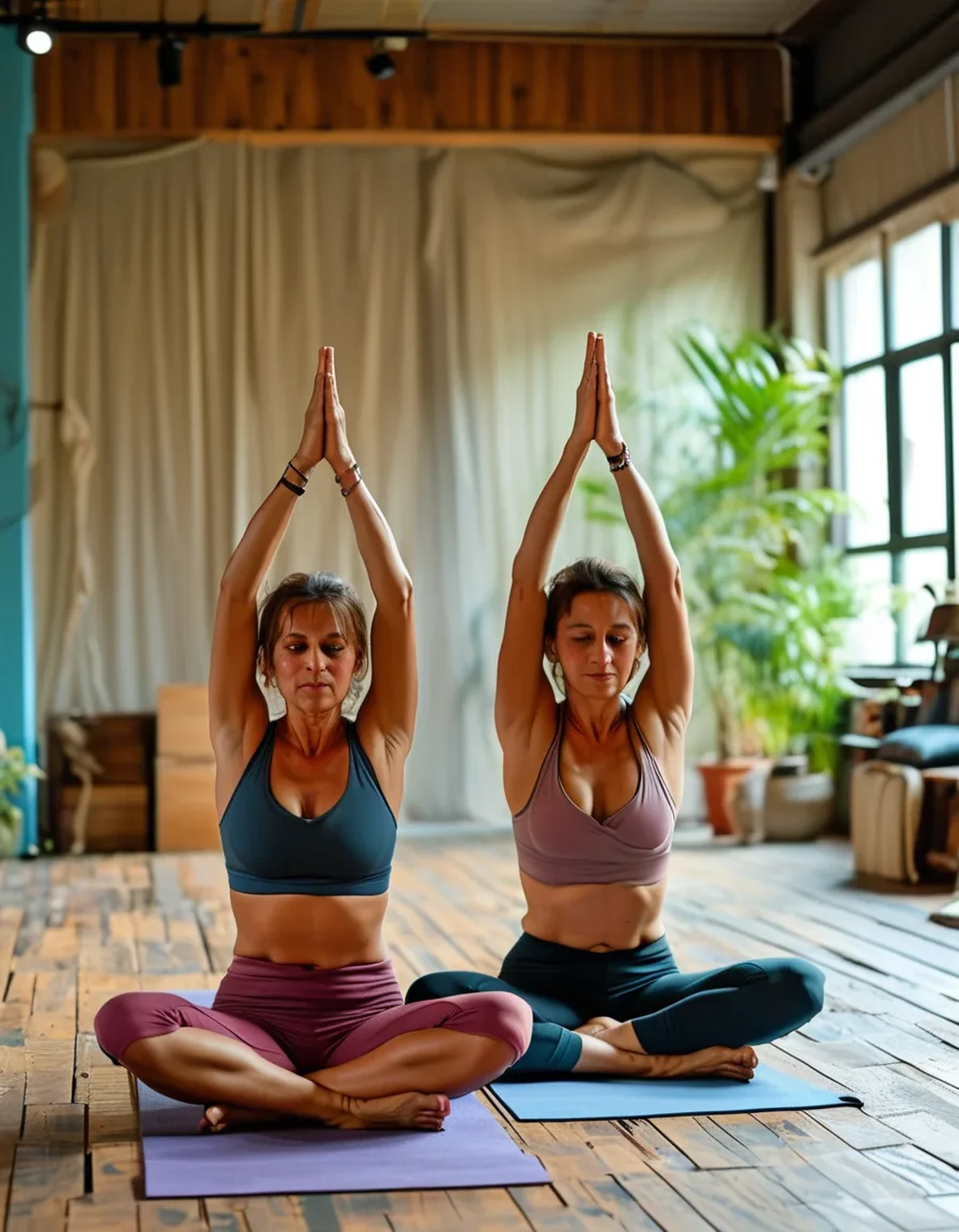
Communication genuinely matters more in a mismatched-height partnership than in a well-matched one — checking in verbally about pressure and balance throughout a pose, rather than assuming the standard instructions will just work, prevents most of the discomfort height differences can cause. Certain partner poses are inherently more height-forgiving than others — poses relying on general counterbalance (like a simple seated forward-fold assist) tend to adapt better to a height gap than poses requiring precise, matched contact points (like a back-to-back backbend).
Is it worth avoiding partner poses altogether with a large height gap, or just adapting them?
Adapting is almost always better than avoiding — most partner poses can be modified to work reasonably well across a height gap with small placement changes, and the counterbalance and trust-building benefits of partner practice are still valuable even when the exact textbook form isn’t achievable.
FAQ: Tall-Short Partner Yoga, Answered
Should the taller or shorter partner take the lead in adjusting a pose?
Whoever notices the mismatch first should speak up — there’s no fixed rule about who leads the adjustment; ongoing communication from both sides works better than assigning the responsibility to one partner.
Are there specific partner poses considered easiest for a big height gap?
Seated, ground-based partner stretches (rather than standing or inverted partner poses) are generally the most forgiving of a height mismatch, since they rely less on precisely matched vertical contact points.
Does a large height gap make partner yoga less effective overall?
Not necessarily — it changes how poses need to be adapted, but the core benefits (trust, communication, deeper stretch through counterbalance) remain available with the right adjustments.
TL;DR:
- A significant height gap shifts where partner pose contact points naturally land, disrupting standard instructions
- Back-to-back and seated poses relying on matched height are usually the most affected
- Adjusting contact points naturally, using props, or bending knees closes much of the practical gap
- Ground-based, counterbalance-focused poses tend to be more forgiving of a height mismatch than standing ones
A big height difference doesn’t rule out effective partner yoga — it just means adapting placement instead of following the standard instructions exactly.
Keep Reading
This article is for general informational and styling purposes only. Fit, sizing, and product availability may vary.
