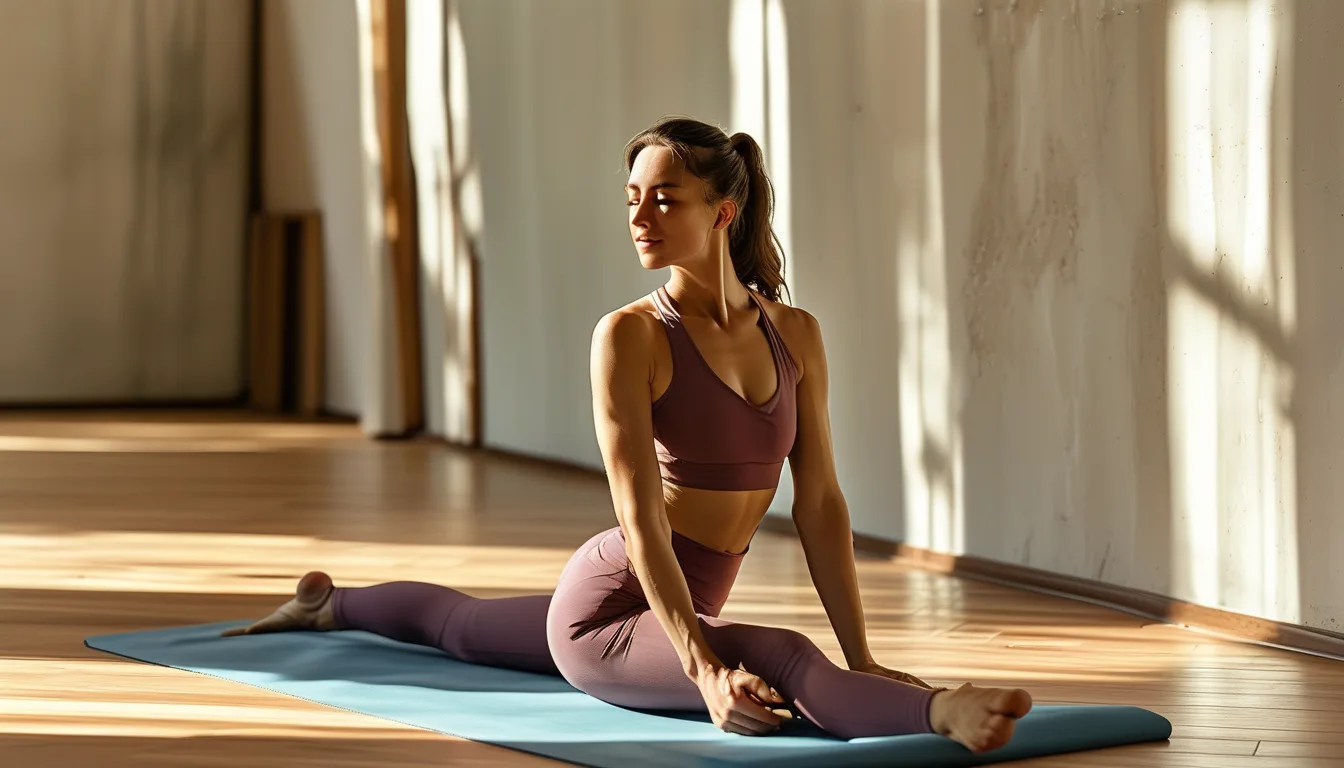
Why Certain Yoga Poses Feel Genuinely Different in a Low-Ceiling Studio When You're Tall
Quick Answer: A ceiling that comfortably clears an average-height practitioner’s inversions can feel genuinely close for a taller one, which triggers a subtle hesitation that shows up as reduced extension in poses like handstand or wheel. Checking ceiling height before booking, or simply asking, removes a real physical constraint — not just a mental one.
Your handstand feels fine at home. In a particular studio, though, something makes you pull back early — and it’s not nerves, it’s an actual few inches of missing clearance.
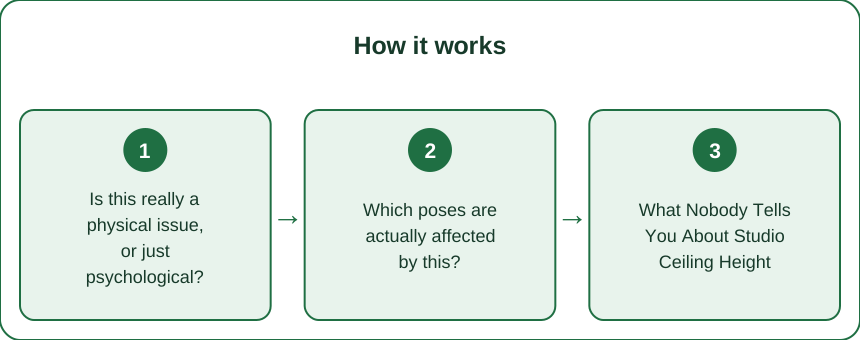
Is this really a physical issue, or just psychological?
Both, but it starts as physical. Standard studio ceilings are built to code minimums that comfortably clear average height, not the added reach of a tall practitioner’s inversion or full extension. Once that near-miss happens once, hesitation compounds it further — but the initial trigger is a real spatial constraint.
This is why the same pose can feel completely different between two studios with different ceiling heights, independent of skill or flexibility.
Which poses are actually affected by this?
Handstand and forearm stand are the most obvious, since they involve full vertical extension. Wheel pose and full backbends are affected too, since the top of the head and hands can come close to overhead fixtures like lighting fixtures or ceiling fans in some studios.
Standing poses with raised arms (Warrior I, Tree with arms overhead) are rarely an issue — it’s specifically the inversions and deep backbends where clearance matters.
What Nobody Tells You About Studio Ceiling Height
Most studios don’t list ceiling height anywhere in their booking information, even though it’s a real factor for taller practitioners. A quick email or call asking about ceiling height before booking a class, especially one focused on inversions, is a completely reasonable question — instructors who teach inversion-heavy classes are usually aware of the issue already.
Some practitioners simply do a first inversion attempt more conservatively in a new space, treating the first session as a scouting trip rather than a full-effort attempt.
Does this affect home practice too?
Yes, often more so — home ceiling heights, especially in older houses or apartments, can be lower than typical studio ceilings. If handstand practice at home feels more restricted than expected, checking actual ceiling clearance against your fully extended reach explains a lot of otherwise confusing inconsistency.
FAQ: Tall Yoga Practitioner Ceiling Questions, Answered
How much ceiling clearance is actually needed for a safe handstand?
As a rough guide, your standing reach height plus at least a foot of buffer is a reasonable minimum for confident practice, though this varies by individual comfort.
Should I ask a studio about ceiling height before signing up for a class package?
It’s a reasonable question, especially for inversion-focused classes — most studios won’t mind being asked.
Is it normal for confidence in inversions to vary this much between spaces?
Yes — it’s a common, under-discussed experience among taller practitioners specifically, not a sign of inconsistent skill.
TL;DR:
- Standard studio ceilings clear average height comfortably but can feel genuinely close for taller practitioners
- Handstand, forearm stand, and full backbends are the poses most affected by ceiling clearance
- Asking about ceiling height before booking an inversion-focused class is a reasonable, common question
- Home practice spaces, especially older buildings, can have lower clearance than expected
The hesitation you feel in a low-ceiling studio isn’t a confidence problem — it’s your body correctly reading real spatial constraints most rooms weren’t built to account for.
Keep Reading
This article is for general informational and styling purposes only. Fit, sizing, and product availability may vary.