Why Hot Yoga Mat Grip Fails Sooner When You Are Tall
Quick Answer: Mat grip depends on friction between skin and surface, and a film of sweat destroys it. A taller practitioner has more skin area producing sweat, spreads hands and feet further apart so more of the mat is loaded, and often extends past the mat’s usable length entirely. That means grip fails earlier in class and in more places at once. The mat is not defective — it is being asked to do more.
A longer mat and a proper towel solve most of it.
Why does grip fail faster for a taller practitioner?
More sweat, spread over more of the mat, in positions with longer levers.
Grip on a yoga mat comes from friction between skin and surface, and friction collapses when a liquid film separates the two. Sweat is exactly that film, and in a heated room it arrives continuously.
Three things stack for a taller body:
More total sweat. A larger skin surface area produces more sweat in absolute terms for the same heat load, so more liquid reaches the mat per minute.
Wider hand and foot placement. In downward dog, warrior poses, and any wide stance, a taller practitioner covers considerably more of the mat’s area, so a larger proportion of the surface becomes wet. A shorter practitioner’s sweat concentrates in a smaller zone that a towel covers easily.
Longer levers mean higher forces at the contact points. In a plank or downward dog, the load through the hands depends on body geometry, and a longer body creates larger moments that must be resisted by friction at the hands and feet. More force through a slippery surface means slipping sooner.
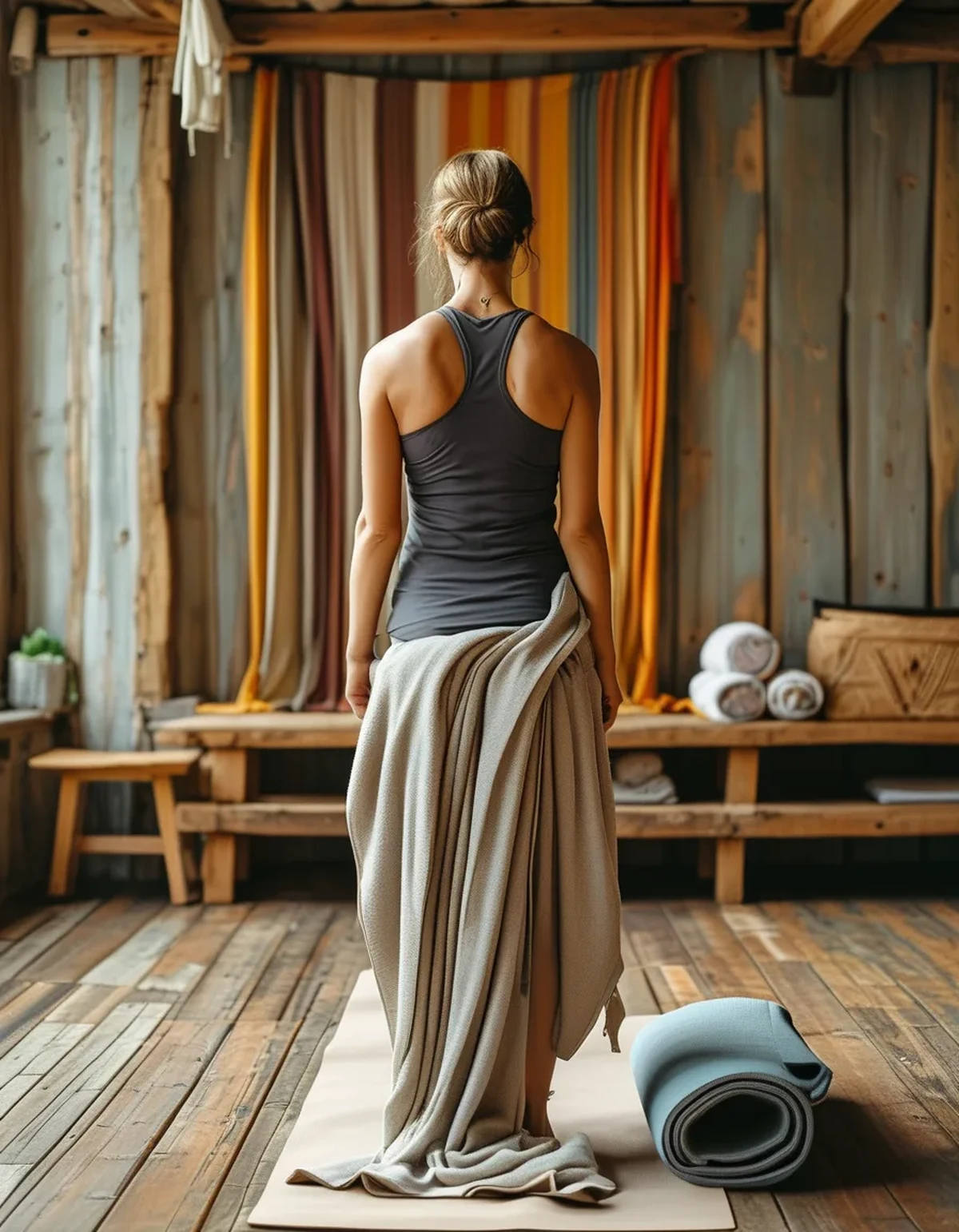
And there is the length problem. Standard mats run around 173cm, which leaves many tall practitioners with hands or feet on the floor in downward dog or in a long lunge. Studio floors are far more slippery than mats, so grip fails completely rather than partially.
Extended positions also demand more grip. A longer stance in warrior two has a greater tendency to slide apart, so the friction requirement is higher at exactly the moment it is least available.
What actually solves it?
Length, a proper towel, and a change to how you set up.
Get a longer mat. Extra-long mats at 200cm or more exist and they are the single most effective purchase for a tall practitioner. Everything else on this list is a workaround for a mat that is too short.
Use a dedicated hot yoga towel, not a bath towel. Microfibre yoga towels are designed to grip better when wet, which sounds contradictory and is the whole point — the fibres bind to the mat as they dampen. A bath towel does the opposite and slides.
Match the towel to the mat length. A standard towel on a long mat leaves the ends exposed, which is where a tall practitioner’s hands and feet actually land.
Dampen the towel before class. A lightly misted towel grips from the first pose rather than after twenty minutes of sweating onto it.
Mat material matters. Natural rubber and open-cell polyurethane surfaces grip well and grip better when damp, while closed-cell PVC repels moisture and becomes slick. Open-cell mats need more cleaning and are worth it in a heated room.
Use grip aids at the contact points. A small towel for the hands, or a grip-enhancing spray, helps at the specific points that fail first.
Change your setup position. Place yourself so your longest pose fits on the mat, rather than centring yourself. In a class where downward dog is frequent, sacrificing head-end space for foot-end space is usually correct.
Set up away from the heaters and the door. Position in a hot studio affects how much you sweat, and tall practitioners closer to a ceiling-mounted heater are in a hotter layer of air than shorter neighbours.
Spread the fingers wide and press through the fingertips, which increases contact area and gives you an active grip rather than relying on friction alone.
What Nobody Tells You About Hot Yoga and Height
The room is not one temperature, and you are higher in it. Heat rises, and in a heated studio the air near the ceiling can be several degrees warmer than at floor level. Standing poses put a tall head well into that warmer layer, which is why the standing sequence feels disproportionately hard.
Mat width matters as much as length. Standard mats are around 61cm, and wide stances on a taller frame frequently put a foot on the floor at the side. Wide mats exist and are less well known than long ones.
Sweat pools at the low points of your body. In downward dog that is the hands and the head, which is why hands slip first for almost everyone and worse for anyone spending longer in the pose.
Your mat wears unevenly. The contact points get the most wear, and a tall practitioner’s contact points are near the ends where mats are thinnest and least supported.
Cleaning matters more in a heated room. Body oils and sweat residue accumulate and reduce grip progressively over weeks. A mat that grips worse than it did three months ago usually needs cleaning rather than replacing.
Hydration affects sweat composition and volume. Well-hydrated practitioners sweat more freely, which is good for cooling and worse for grip.
Alignment cues are calibrated for average proportions. Instructions like heel-to-arch or feet hip-width apart assume proportions, and a taller practitioner following a cue literally may end up in a stance that is too narrow for their frame, which increases the tendency to slide.
What changes as the season shifts?
The studio conditions change even though the heat is artificial, and the transition is worth planning for.
Late summer studios are at their most humid. Heated rooms combine artificial heat with humid outdoor air being drawn in, and a room at high humidity means your sweat does not evaporate at all — it simply runs onto the mat. This is the worst grip condition of the year.
Ventilation is doing less work right now, because outdoor air is warm and moist, so studios cannot dump humidity as effectively as they can in autumn.
As outdoor air dries in autumn, grip improves noticeably in the same studio with the same mat, because the room ventilates more effectively and sweat evaporates rather than pooling.
Arriving hot makes it worse. A hot commute means starting class with an elevated core temperature and sweating from minute one. Arriving 15 minutes early and cooling down first genuinely improves the first half of class.
Hydrate the day before, not just before class. Fluid status on the day is largely set by the previous 24 hours, and a taller frame in a heated room loses more in absolute terms.
Late August is a good time to replace a worn mat. Studios and retailers run end-of-summer promotions, and starting the autumn season on a full-length mat changes the practice more than any technique adjustment.
Autumn brings cooler arrival conditions, which means warming up matters more before deep poses. A tall body with long muscles crossing multiple joints needs more warm-up time in cool weather, and studios heated to the same temperature do not change how cold you were when you walked in.
As always, listen to your body in a heated room. Dizziness, nausea, or stopping sweating are reasons to leave the room and cool down, not to push through. This is general practice guidance rather than medical advice.
FAQ: Tall Hot Yoga Questions, Answered
What mat length should I look for?
Extra-long mats at 200cm or more, if you find your hands or feet off the mat in downward dog or a long lunge. It is the single most useful change for a tall practitioner.
Why does my towel make it worse?
Because it is probably a bath towel. Microfibre yoga towels are designed to bind to the mat as they dampen; ordinary terry towels slide on the surface as soon as they are wet.
Should I use a grip spray?
They help at the hands, which is where grip usually fails first. A damp microfibre towel plus wide fingers and active pressing solves most of it without any product.
Why does the standing sequence feel harder than the floor sequence?
Partly because heat rises, so your head is in a warmer layer of air when standing. In a heated studio the vertical temperature difference is real and taller practitioners feel it more.
TL;DR:
- Mat grip is friction, and sweat destroys it — a taller body produces more of it and spreads it over more of the mat.
- Standard mats are too short for many tall practitioners, which puts hands or feet onto a slippery studio floor.
- An extra-long mat plus a dampened microfibre towel solves most of the problem in one purchase.
- Late summer humidity is the worst grip condition of the year, and it improves as autumn air dries out.
Measure your downward dog on your current mat. If a hand or a heel is off it, that is the fix.
Keep Reading
This article is for general informational and styling purposes only. Fit, sizing, and product availability may vary.
